Choosing Resilient Flooring London: A Guide for Period Properties and Modern Spaces
Why Resilient Flooring Matters in London
London's housing stock is famously varied. You get Georgian townhouses in Spitalfields, Victorian terraces in Clapham, post-war council blocks in Poplar, and new-build flats in Nine Elms. Each comes with its own floor problems. Damp. Uneven subfloors. Creaking boards. The wrong finish for the use. After twenty years working on floors across the capital, I have learned one thing for sure: the material you choose has to earn its place. That is where resilient flooring London comes in. It is not a single product but a category that includes everything from Luxury Vinyl Tile to linoleum, cork, and SPC flooring. The key is knowing what fits your building and your budget.
Resilient flooring sits between cheap laminate and solid hardwood. It copes with moisture better than timber, it is kinder underfoot than ceramic tile, and it can look convincingly like stone or wood without the cost. But the term covers a wide range of quality. A budget Vinyl composition tile (VCT) in a school hallway behaves very differently from a premium Karndean plank in a Victorian sitting room. The trick is to match the material to the room's actual demands, not just the look in a brochure.
What Counts as Resilient Flooring?
Strictly speaking, resilient flooring is any floor covering that can flex slightly under load and bounce back. That excludes rigid materials like stone, concrete, and most ceramics. It includes:
- Luxury Vinyl Tile (LVT) and Vinyl composition tile (VCT)
- Linoleum, notably Forbo Marmoleum
- Natural cork flooring and Bamboo flooring
- Stone plastic composite (SPC) flooring
- Sheet vinyl from manufacturers like Altro, Polyflor, and Gerflor
Each has a different life span, maintenance routine, and installation method. For example, LVT is widely used in London flats because it can be glued down or floated over existing floorboards. Sheets Amtico, a brand many people recognise from high-end retail, is essentially a luxury sheet vinyl that can be cut into tiles or planks. It is more forgiving of subfloor imperfections than ceramic tile, which is why so many London Design Festival installations use it for temporary exhibition spaces that need to look pristine but come up cleanly afterwards.
Period Properties and Subfloor Challenges
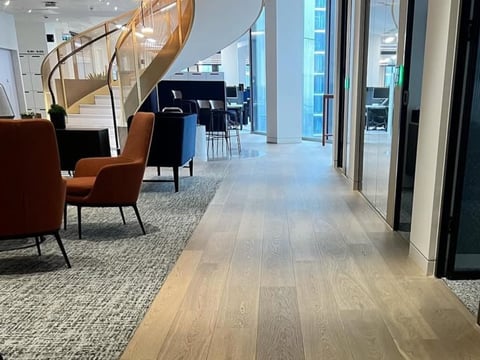
If you work in central London, you deal with historic floors every week. A Georgian townhouse in Bloomsbury might have original pine boards that are two hundred years old, with gaps, dips, and the occasional patch of dry rot. Slapping down a rigid tile is asking for trouble. The subfloor moves with seasonal moisture changes, and a rigid installation will crack. Resilient flooring London installers understand this. They specify products that can tolerate movement.
Natural cork flooring is a smart choice here. It compresses slightly under load, so it accommodates minor subfloor undulations without telegraphing them through the surface. It also insulates well, which matters in a draughty period room. Bamboo flooring is harder and less forgiving, but it is more dimensionally stable than many hardwoods, so it works in rooms where humidity fluctuates. SPC flooring is a newer option. It is a rigid core board with a stone plastic composite layer that resists dents, but it needs a very flat subfloor because it does not hide imperfections. If your boards are uneven, you must self-level before fitting SPC.
Commercial and Heavy-Use Spaces
In commercial settings, the priorities shift. A restaurant kitchen in Soho needs a floor that does not absorb grease, that can be deep-cleaned weekly, and that stays slip-resistant when wet. Altro is a staple here. Its sheet vinyl has a textured surface that meets UK slip-resistance standards even when the floor is oily. Polyflor and Gerflor also produce heavy-duty sheet vinyl used in hospitals and schools. Vinyl composition tile (VCT) used to dominate the education sector, but many London schools are now switching to LVT or linoleum because VCT requires regular waxing and stripping, which is costly in labour.
Forbo Marmoleum, a natural linoleum made from linseed oil, rosin, and wood flour, is another strong contender in commercial interiors. It has antibacterial properties, which is why you see it in NHS buildings and RIBA-awarded offices. It is not as cheap as sheet vinyl, but its life span can exceed thirty years if maintained correctly. A Marmoleum floor in a busy London co-working space will look tired after five years if people drag chairs across it without felt pads. But with proper care, it can outlast the fit-out.
Luxury Vinyl Tile: The Sweet Spot for Many Homes
Luxury Vinyl Tile is the product I recommend most often to homeowners in London who want a wood look without the vulnerability of real timber. LVT from brands like Karndean and Amtico is printed with high-resolution imagery and embossed to mimic wood grain or stone texture. It is warm underfoot, quiet, and repairable. If you scratch a solid wood floor, you have to sand and refinish the whole board. With LVT, you cut out the damaged tile and glue in a new one. That is a major advantage in a rental flat or a busy family kitchen.
Tarkett produces a range of LVT that is particularly good for bathrooms and basements because it is fully waterproof. The same cannot be said for real wood or engineered wood, which swell when they get wet. I have seen too many London basements flooded by a washing machine overflow, and the owner ends up replacing the entire laminate floor. LVT can be lifted, dried, and relaid, or simply mopped clean. For a garden room or a ground-floor flat with a history of damp, LVT is hard to beat.

Crittall flooring is a term you sometimes hear in connection with resilient floors, though it originally refers to a style of steel-framed window. In flooring, it describes a grid system used to support tiles over an uneven subfloor or to create a raised access floor in offices. If you are fitting resilient flooring London in a commercial building with cable runs underneath, a Crittall-style grid can be a neat solution. It is not common in domestic work, but it appears in listed buildings where you cannot fix anything to the original floor structure.
How to Choose: Trade-offs You Need to Know
Every resilient floor involves a compromise. Here is a quick breakdown from what I have seen on site:
- Sheet vinyl (Altro, Polyflor, Gerflor) is cheap and waterproof but can look cheap in large areas. Seams are visible and can lift if the adhesive fails.
- LVT (Karndean, Amtico, Tarkett) looks excellent and is easy to repair, but it can dent under heavy furniture if the subfloor is soft. Use a plywood underlayment in high-traffic zones.
- Linoleum (Forbo Marmoleum) is natural and durable but requires regular polishing in commercial use. It also has a distinct smell when new, which some people dislike.
- Cork is quiet and warm but scratches easily. It needs a strong top coat in kitchens and hallways.
- SPC flooring is rigid and dent-resistant but unforgiving of subfloor dips. It also feels colder underfoot than cork or LVT.
If you are working on a project in London, the choice often comes down to the subfloor condition and the budget for preparation. A perfect screed can take any product. A warped timber subfloor might dictate cork or a loose-lay LVT system that floats over the boards.
Installation and Maintenance: What I Have Learned
Getting the floor flat is the single most important step. I have walked into too many jobs where the client bought expensive Amtico planks but skimped on the subfloor preparation. Two years later, the tiles have lipping at the joints and the owner is blaming the product. It is not the product. It is the ground underneath. In London, with its old buildings and mixed construction, you almost always need a self-levelling compound before fitting resilient flooring London. That adds a day and a few hundred pounds, but it saves thousands in callbacks.
Maintenance is another area where people get caught out. Sheet vinyl and LVT need nothing more than a damp mop and a neutral cleaner. Do not use wax or polish on LVT; it creates a sticky film that attracts dirt. Forbo Marmoleum needs an acrylic sealer when it is first installed, and then periodic buffing with a dry pad. Cork floors need a fresh coat of oil or lacquer every few years, depending on traffic. If you ignore that, the cork will start to wear through at entry points. Bamboo needs to be kept dry at the edges or it will cup. SPC is low-maintenance but can be scratched by grit, so a good doormat is essential.
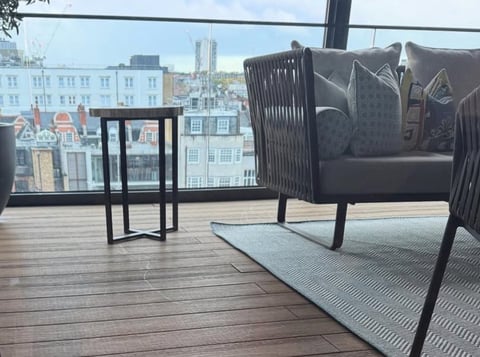
The London Design Festival often showcases innovative resilient flooring in temporary pavilions and show flats. I have seen designers use Gerflor sheet vinyl printed with bold geometric patterns to create a feature floor that cost a fraction of a custom mosaic. That is the real advantage of resilient flooring: it gives you design flexibility without the price or fragility of natural materials. For a rental property, it means you can satisfy a picky tenant with a wood look that will not warp in a leak. For a period home, it means you can protect original floorboards by covering them with a reversible floating floor.
Final Thoughts
Resilient flooring London is not a single answer. It is a category filled with options that suit different buildings, budgets, and uses. The best approach is to start with the facts: what is your subfloor made of, how much foot traffic do you expect, will the room get wet, and how long do you want the floor to last? Then match those facts to the material. LVT for versatility, linoleum for sustainability, cork for comfort, sheet vinyl for economy. And always, always prepare the subfloor properly. That is the difference between a floor that looks good for a decade and one that needs replacement in two years.